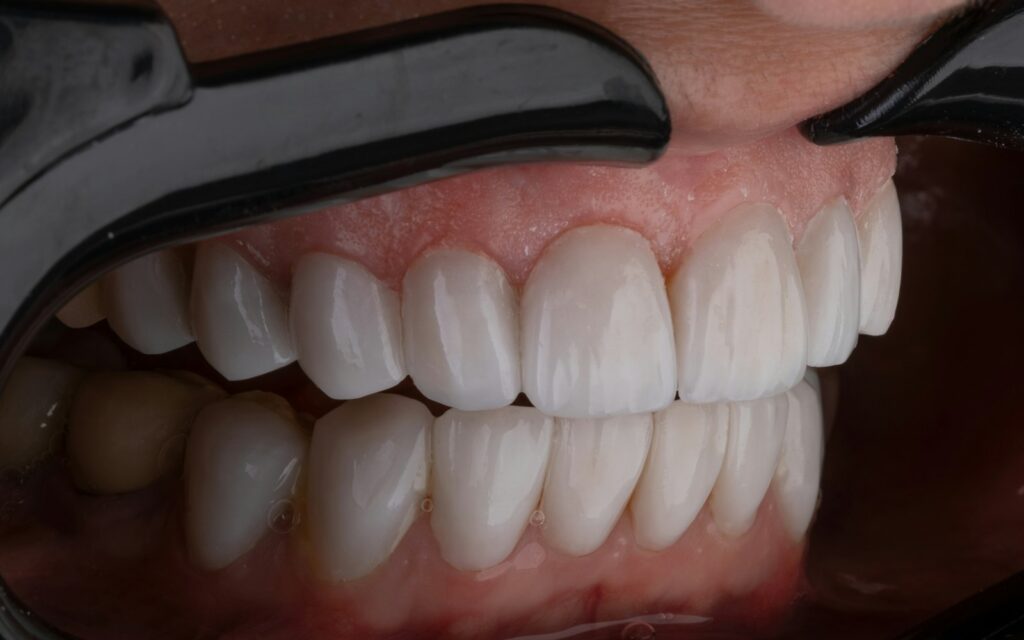
Chipped edges, small gaps, uneven lengths, and stains that whitening cannot fix can make people hide their smile. Two of the most popular cosmetic treatments for these concerns are porcelain veneers and dental bonding. Both can create beautiful results, but they differ in durability, cost, and how much they change the tooth. At Olive Branch Dental Columbus, we help patients choose the option that best fits their goals.
What Is Dental Bonding?
Bonding uses a tooth-colored composite resin that is applied directly to the tooth, shaped by hand, hardened with a curing light, and polished. It is often completed in a single visit, usually with little or no removal of natural enamel.
Bonding is a great choice for:
- Small chips and cracks
- Minor gaps between teeth
- Reshaping a slightly short or uneven tooth
- Covering small areas of discoloration
Pros: lower cost, quick treatment, minimal tooth preparation, and easy repairs.
Cons: composite can stain over time, is less strong than porcelain, and usually needs touch-ups or replacement every several years.
What Are Porcelain Veneers?
Veneers are thin, custom-made shells of dental porcelain that are bonded to the front surfaces of the teeth. A small amount of enamel is usually removed so the veneer sits naturally. Impressions or digital scans are sent to a dental lab, where the veneers are crafted to match your desired shape and shade.
Veneers are ideal for:
- Deep stains that do not respond to whitening
- Several teeth that are worn, chipped, or uneven
- Mildly crooked teeth when orthodontics is not preferred
- A complete smile makeover
Pros: excellent stain resistance, a natural translucent look, and long-lasting results that can last 10 to 15 years or more with good care.
Cons: higher cost, more than one visit, and the process is generally not reversible because enamel is reshaped.
Side-by-Side Comparison
- Appointments: Bonding usually takes one visit; veneers usually take two or more.
- Durability: Bonding often lasts several years; porcelain veneers typically last much longer.
- Stain resistance: Porcelain resists stains better than composite.
- Tooth preparation: Bonding is minimal; veneers require some enamel removal.
- Cost: Bonding costs less per tooth upfront.
Are You a Good Candidate?
Both treatments require healthy teeth and gums. Cavities and gum disease should be treated first. Patients who grind their teeth may need a night guard to protect bonding or veneers. If you plan to whiten, it is best to whiten before treatment so we can match the new shade.
Caring for Your Results
Brush and floss daily, avoid biting hard objects such as ice and pens, limit stain-causing drinks with bonding, and keep regular checkups so we can polish and inspect your restorations.
What Happens at a Cosmetic Consultation
Your consultation is a relaxed conversation about what you like and dislike about your smile. We examine your teeth and gums, check your bite, and may take photos or digital scans. We then explain which option, bonding, veneers, whitening, or a combination, can best reach your goals, along with the expected number of visits, how long results typically last, and estimated costs. Many patients choose bonding for one or two small fixes and veneers for a more complete transformation. There is never pressure to decide on the spot.
Plan Your Smile Makeover
Not sure which option is right for you? Schedule a cosmetic consultation with Olive Branch Dental Columbus. Call (812) 516-5777 or visit us at 2459 W Jonathan Moore Pike, Columbus, IN 47201.