Gum disease is one of the most common oral health problems in adults, yet many people do not realize they have it. It usually develops quietly, without pain, until it has already caused damage. At Olive Branch Dental Columbus, we believe the best way to protect your smile is to catch gum disease early, when it is easiest to reverse. Here is what to look for and how we treat it.
What Is Gum Disease?
Gum disease, also called periodontal disease, is an infection of the tissues that hold your teeth in place. It begins when plaque, a sticky film of bacteria, builds up along the gumline. If plaque is not removed, it hardens into tartar, which only a dental professional can remove. The bacteria irritate the gums and trigger inflammation.
Gingivitis is the earliest stage. The gums become red, swollen, and bleed easily, but the bone and connective tissue are not yet affected. Gingivitis can usually be reversed with professional cleaning and better home care.
Periodontitis is the advanced stage. The gums begin to pull away from the teeth, forming pockets where bacteria collect. Over time the supporting bone breaks down, teeth can loosen, and tooth loss may follow.
Early Warning Signs
- Gums that bleed when you brush or floss
- Red, swollen, or tender gums
- Persistent bad breath or a bad taste in the mouth
- Gums that look like they are pulling back, making teeth appear longer
- New spaces between teeth or teeth that feel loose
- Changes in how your teeth fit together when you bite
- Pus between the teeth and gums
Bleeding gums are not normal, even though many people assume they are. If your gums bleed regularly, it is time for a dental visit.
Who Is at Higher Risk?
Anyone can develop gum disease, but some factors raise the risk, including smoking or vaping, diabetes, hormonal changes during pregnancy, certain medications that cause dry mouth, stress, a family history of gum problems, and crooked teeth that are hard to clean. Research has also linked gum disease with other health conditions such as heart disease and diabetes, which is one more reason to keep your gums healthy.
How We Diagnose Gum Disease
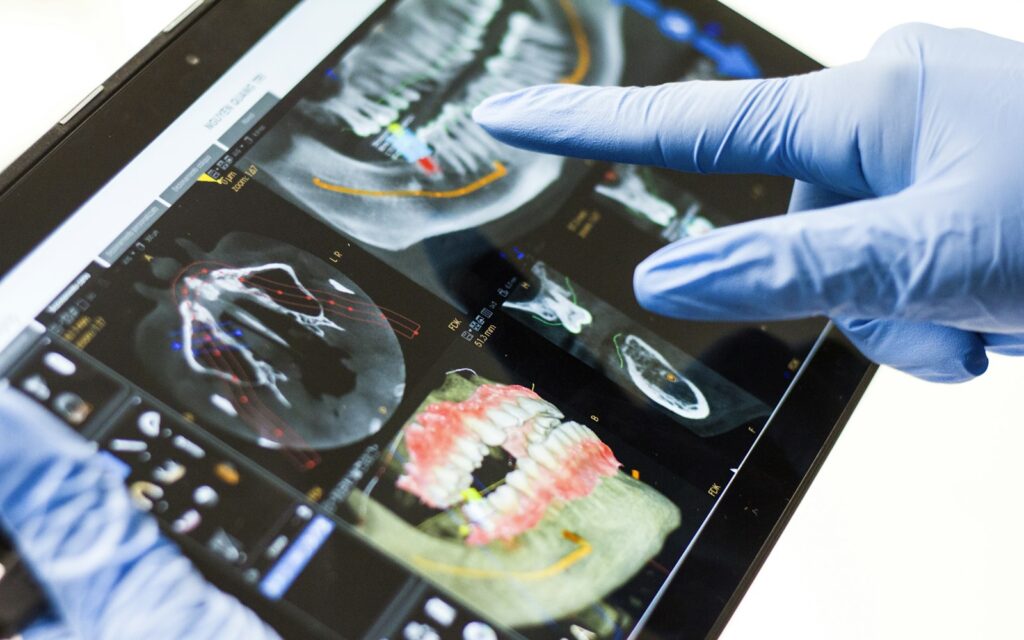
During your exam, we gently measure the depth of the spaces between your teeth and gums with a small instrument. Healthy pockets are shallow. Deeper pockets suggest gum disease. Digital X-rays help us check the bone levels around your teeth.
Gum Treatment Options
Professional cleaning: For gingivitis, a thorough cleaning plus improved brushing and flossing is often enough to restore healthy gums.
Scaling and root planing: This deep cleaning removes plaque and tartar from below the gumline and smooths the root surfaces so the gums can reattach. It is done with local anesthetic for comfort.
Periodontal maintenance: Patients with a history of periodontitis benefit from cleanings every three to four months to keep the disease under control.
Advanced care: In more severe cases, additional treatments or a referral to a periodontist may be recommended.
Protecting Your Gums at Home
- Brush twice a day with a soft-bristled brush, angling toward the gumline.
- Floss or use interdental brushes once a day.
- Consider an antibacterial mouth rinse if recommended.
- Quit tobacco products.
- Keep regular dental cleanings.
Take Action Early
Healthy gums are the foundation of a healthy smile. If you have noticed bleeding or tender gums, call Olive Branch Dental Columbus at (812) 516-5777 or visit 2459 W Jonathan Moore Pike, Columbus, IN 47201 for a gum health evaluation.